Creating a Healthier Home for Your Pets
Simple ways to reduce microplastic exposure for the animals we love.
I love my dog. And like many others, I spend a lot of money, time and energy keeping him happy and healthy.
When I started learning more about microplastics and plastic-related chemicals in the home, I began wondering how they could be impacting him.
If your pets are anything like mine, they spend a lot of time inside our homes. They sleep on our floors, curl up on blankets, play with their favourite toys and eat and drink from bowls that may be made from plastic. They are also often much closer to the floor than we are, where dust, fibres and other particles settle.
When we think about reducing microplastic exposure, we naturally think about our own food, water bottles, cookware and personal products. But our pets share the same environment, and they have their own collection of everyday products to consider.
Research into microplastics and companion animals is still emerging, so we don't yet know exactly what these exposures mean for their long-term health. However, microplastics have been detected in pet foods, and researchers have identified indoor air and dust, food and plastic pet products as potential exposure pathways.
That doesn't mean you need to replace everything your pet owns. As with the rest of our homes, a precautionary approach can simply mean making thoughtful changes over time.
Here are 3 areas to consider when aiming to reduce exposure for your pets:
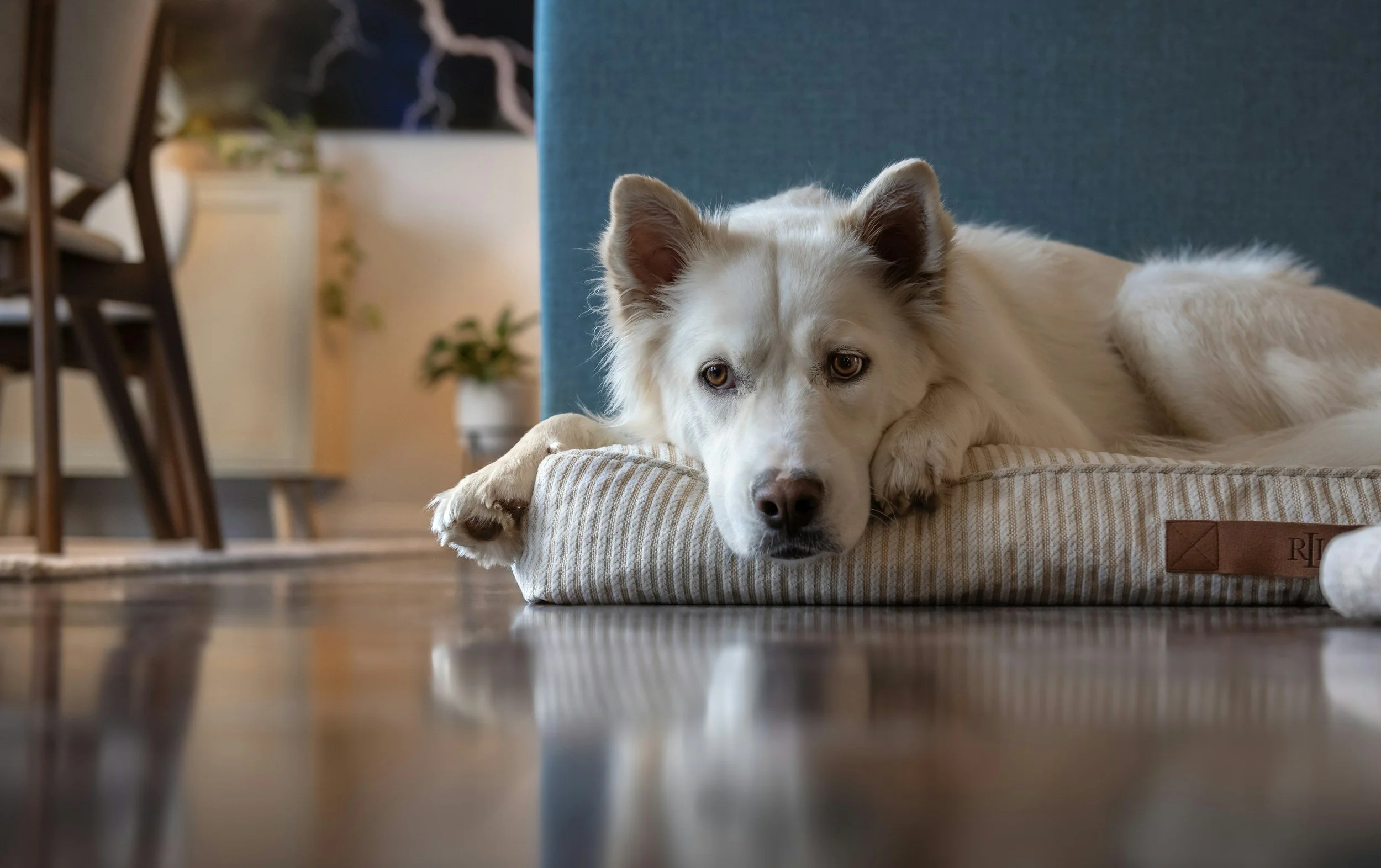
1. Choose natural fibres for pet bedding where possible
Take a look at your pet's bedding, blankets and favourite resting spots. Many pet beds and blankets are made from synthetic materials such as polyester or fleece. Like other synthetic textiles, these materials can shed fibres through everyday use and washing.
When you're replacing worn-out bedding, look for options made from natural fibres such as cotton, linen or wool where practical and suitable for your pet.
You don't need to throw out a perfectly good bed. Use what you have and make a different choice when it's time to replace it.
2. Keep pet bedding and resting areas clean
Microplastics and synthetic fibres can become part of household dust, so managing dust in our homes can support reducing exposure for ourselves and our families.
Our pets are also exposed to the dust and fibres that accumulate in our homes. They spend a lot of time close to the floor, and their bedding, toys and resting areas can collect dust, hair and fibres. Regularly vacuuming floors and cleaning the areas where our pets spend the most time can help manage this build-up.
We don’t need to keep our homes spotless. Simply making regular cleaning part of your normal routine, particularly in those areas where your pet sleeps, eats and plays is enough.
3. Consider plastic pet toys and bowls
Pet products are another area worth considering. My dog has so many toys! Unfortunately, many pet toys, chew products and food and water bowls are made from plastic. Over time, toys can become scratched, cracked or worn, particularly if your pet likes to chew. Plastic food and water bowls can also degrade over time, especially if left sitting in the sun.
Rather than trying to replace everything at once, take a look at what your pet actually uses regularly. I’ve recently discarded all of my dog’s toys that were damaged and starting to fall apart. I’m monitoring which toys are left more closely now. One good option is to gradually choose toys made from natural or more durable materials as new ones are purchased. It’s also useful to monitor the condition of their bowls. Replacing plastic food and water bowls with stainless steel or ceramic as needed is another way to potentially reduce exposure.
A healthier home for them too
Our pets don't need a perfectly plastic-free home any more than we do. Instead, think about the spaces they use every day. Keep their bedding clean and choose natural fibres when replacing. Manage dust around their favourite resting areas. Pay attention to toys and bowls as they wear out.
Small changes like these can support creating a healthier home for everyone who lives in it.
Want support to get started in your own home?
Every household is different. If you'd like support to identify the areas of exposure that are most relevant to your home and create a practical action plan based on your priorities, explore how I can help.