A calm, practical place to begin
We are starting to hear more and more about microplastics, the chemicals associated with them, and the potential impacts on our health. While research in this area is still emerging, many people, myself included, are choosing to take a precautionary approach by gradually reducing exposure.
It can feel overwhelming. Plastic appears to be everywhere, especially in our homes. Microplastics have been found in food, water, and even the air we breathe, which can make it difficult to know where to begin, and easy to assume that meaningful change would require a complete lifestyle overhaul.
Luckily, that’s not the case.
You don’t need to remove all plastic from your life to make a meaningful difference. What matters most is understanding where exposure happens, and focusing on the areas that actually have the greatest impact.
What are microplastics?
Microplastics are very small pieces of plastic, often too small to see, that come from the breakdown of larger plastic items, or are intentionally made small for use in products.
Over time, plastics degrade through heat, UV exposure and friction. This causes tiny particles to be released into the environment.
These particles are now commonly found in:
Food and food packaging
Drinking water
Household dust
Everyday products
While research into microplastics is still developing, we do know that these particles can enter the body through ingestion, inhalation, and skin contact.
Plastics also often contain added chemicals such as:
PFAS
Phthalates
Bisphenols (including BPA)
Some of these are known to interfere with normal hormonal function and may have broader health implications over time.
That said, this isn’t about fear or urgency.
It’s about being informed, and making steady, sustainable changes where they matter most.
Why do they matter?
Where exposure happens in daily life
Microplastic exposure doesn’t come from one single source. It builds up through everyday interactions. Rather than trying to address everything at once, it can be helpful to break it down into key areas within the home.
I’ve created a Healthier Home Framework to simplify where to focus:
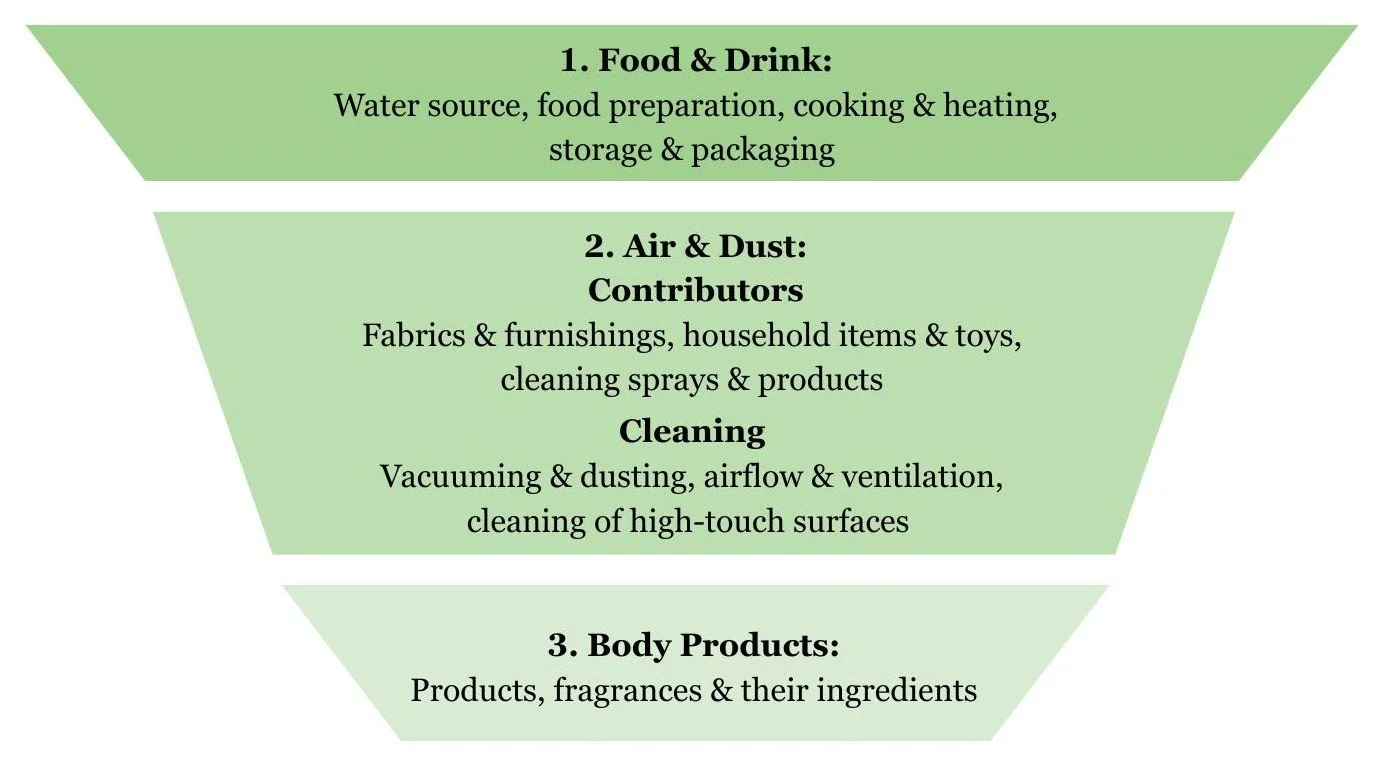
Not all of these need to be addressed at once. Some will have a higher impact than others.
A more practical approach
Everyone’s home, lifestyle, and priorities are different. What works well for one household may not be realistic or necessary for another.
A practical approach focuses on:
Identifying your highest exposure areas
Prioritising what will make the biggest difference
Making changes in a way that feels manageable
This is where personalised guidance can be helpful, especially if you want clarity on what is worth changing and what isn’t.
Ready to take the next step?
If you’d like support in reducing microplastic exposure in a way that is simple and personalised for your household, there are several ways I can help you develop your own achievable action plan.
You can explore your options here: