Does Your Cleaning Routine Need a Clean-Up?
Cleaning products are something we use regularly, often inside our homes and sometimes several times a day. When I started looking more closely at ways to reduce everyday exposure to microplastics and plastic-related chemicals, I realised that the products I use to clean my home were another area worth considering.
I'm not trying to eliminate every chemical from my home, that's neither realistic nor necessary. Instead, I want to create a healthier home environment by reducing unnecessary exposure where I can. For me, that means keeping my cleaning cupboard relatively simple and choosing products that are effective without adding lots of unnecessary ingredients, fragrance or harsh chemicals to my everyday environment.
Here are some of the things I look for:
1. Plant-based ingredients where I can
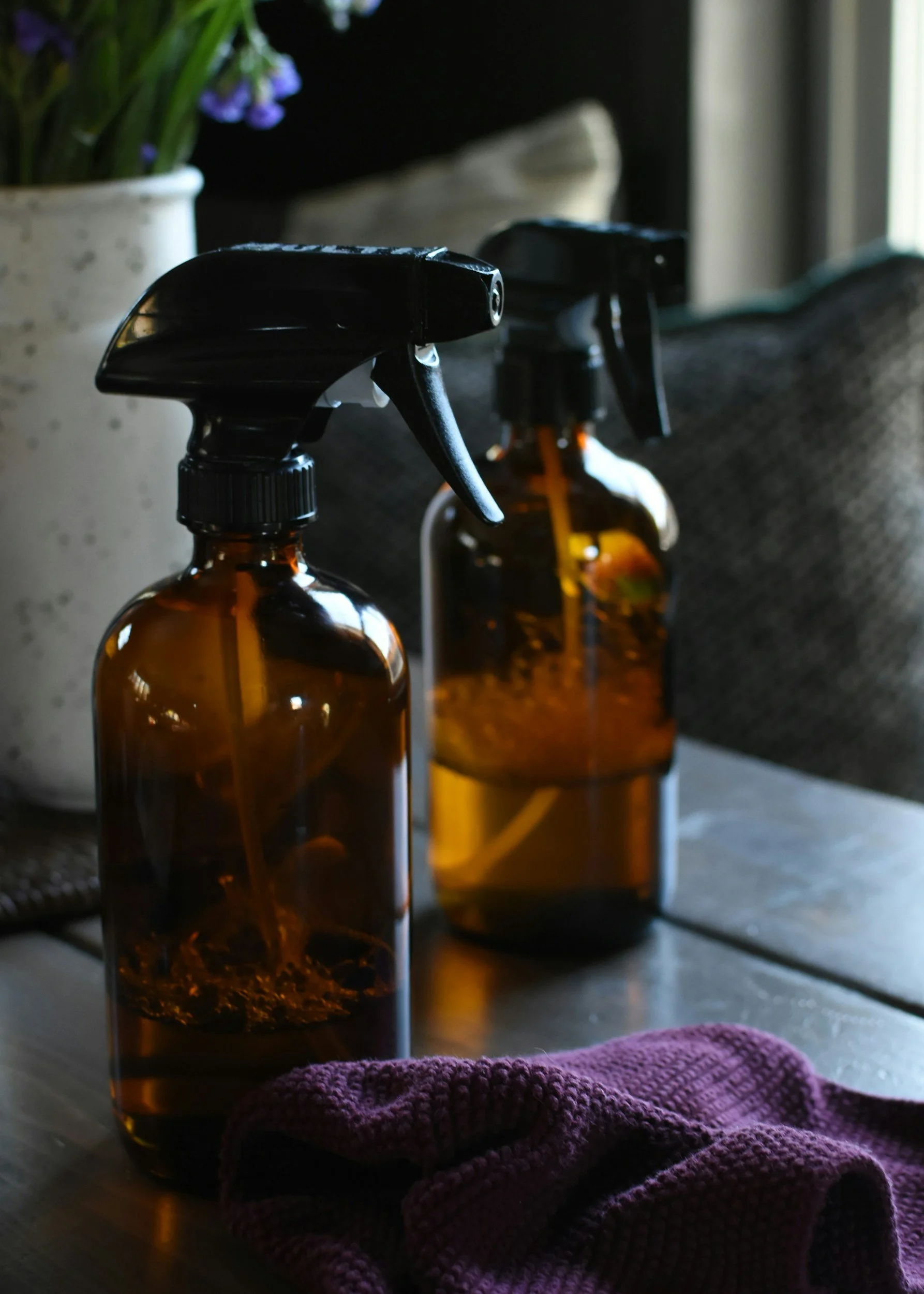
I generally look for cleaning products that use plant-based or naturally derived ingredients where practical.
This doesn't automatically make a product safer, and "natural" isn't a guarantee that a product won't contain ingredients that can irritate the skin or lungs. But I like knowing what I'm using and choosing products with a relatively simple ingredient profile. I also don't think you need to pay a premium for a product simply because it says "natural" or "plant-based" on the front.
Turn the bottle around and look at what is actually in it.
2. Choose fragrance-free or low-fragrance
This is probably one of the easiest changes you can make. I prefer fragrance-free cleaning products, or products with very little added fragrance. Fragrance can contain many different chemical ingredients, and you don't always know exactly what is included from the word "fragrance" on a label. For me, there's also a practical reason for choosing less fragrance: my home doesn't need to smell like cleaning products to be clean.
Clean can simply smell like... nothing.
3. Avoid unnecessarily harsh chemicals
There are times when stronger cleaning products are completely appropriate. For example, certain situations require disinfecting or a product specifically designed to deal with a particular contaminant. I'm not suggesting we should avoid effective cleaning when it is genuinely needed. But for everyday cleaning, I don't think everything needs to be treated as if it requires the strongest product available.
For general jobs such as cleaning benches, sinks, bathrooms and other surfaces, I prefer a simple product that does the job without a long list of unnecessary ingredients. This is less about being afraid of chemicals and more about reducing the number of substances we're routinely bringing into and using around our homes.
4. Don't assume more products equal a cleaner home
I think this is where we can really simplify things. You don't necessarily need one spray for the kitchen, another for the bathroom, another for the shower, another for the toilet and another for every individual surface. A small number of well-chosen products can often do most of the everyday cleaning jobs around the home. Fewer products also mean fewer ingredients being brought into the home and used regularly.
5. Use the right product for the job
Reducing exposure doesn't mean choosing the gentlest product regardless of what you're trying to clean. Sometimes you need something stronger. If I'm dealing with mould, a significant build-up of grime or a situation where disinfection is genuinely required, I'll choose a product that is appropriate for the job and use it according to the instructions.
For everyday cleaning, though, I prefer to keep things simple. It's about using enough to do the job, rather than automatically reaching for the strongest product.
Keep your cleaning cupboard simple
I don't think cleaning products need to be complicated. My approach is to choose simple, effective products with plant-based ingredients where practical, little or no fragrance, and no unnecessary harsh chemicals for routine cleaning.
I'm also didn’t replace every product I already owned overnight. I use what I have and make different choices as products run out or need replacing. For me, this is another small way of reducing unnecessary exposure to microplastics, plastic-associated chemicals and other substances in our everyday environment, while creating a home that feels healthier without making life more complicated.
A clean home doesn't need to smell of cleaning products. Sometimes, simple really is enough.
Want to take this further?
Cleaning is just one element of microplastic exposure in your home. If you'd like support to identify other sources of exposure and create an action plan based on your household, lifestyle and budget, here’s how I can help…